Stack Man journal
How much to buy: pack arithmetic for parties, kitchens and homes
A box of disposables is priced by the box and used by the piece. How to work out the number that matters, and how to size a party, a cafe week and a month of prep.
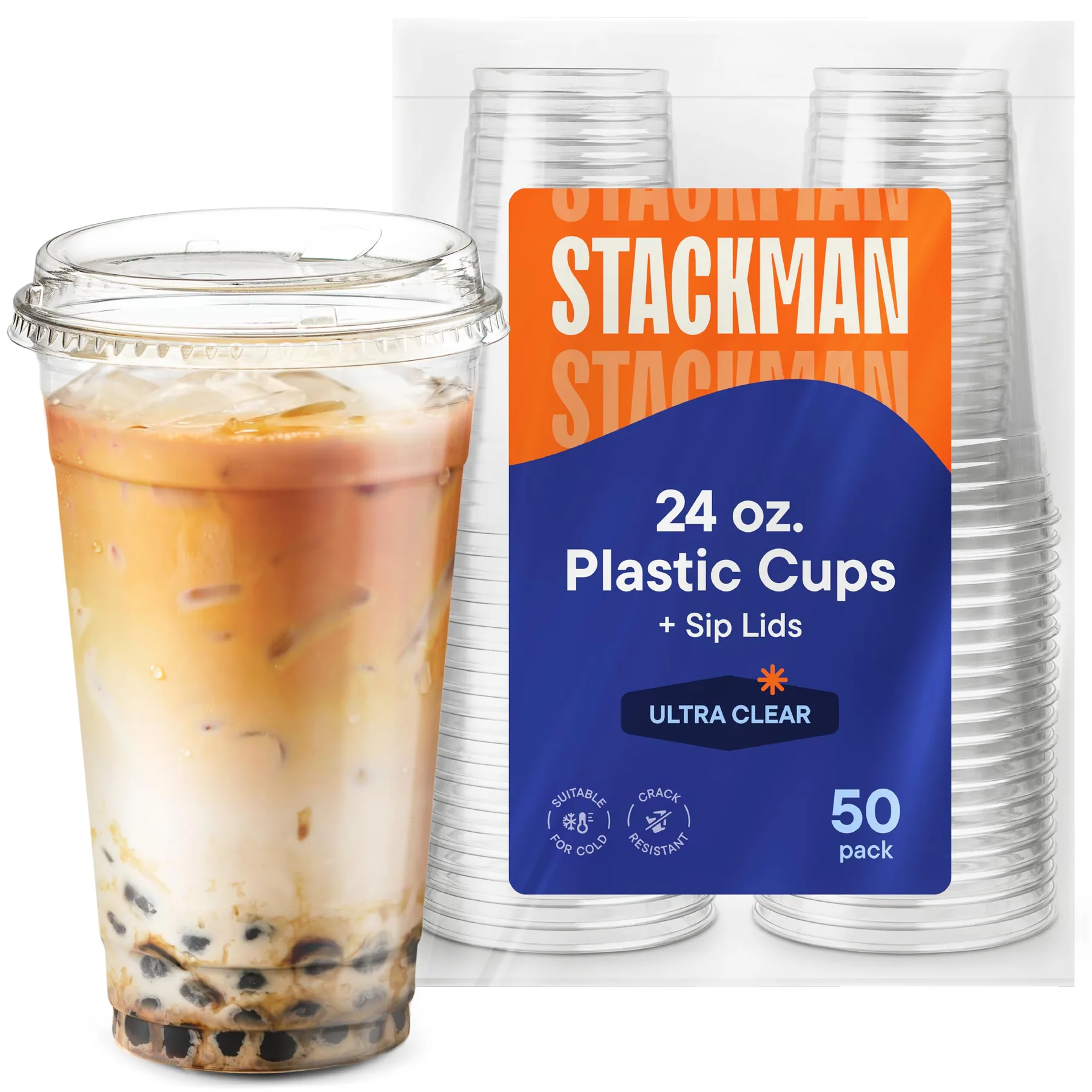
The sticker price tells you almost nothing
The price on the box tells you what you pay for the package. It does not tell you what you pay for the plate, cup or pad that comes out of it. That mismatch is where most people get caught out. You compare two items side by side, see that one costs a few dollars more, and put it back. Then you count how many are actually inside each pack, and the math flips.
Across our 143 products, a single piece can cost as little as 2.4 cents. It can also cost considerably more than that. The middle of our range sits at 26 cents per item, but that number covers everything from a small compostable tasting cup to an industrial training pad measured in feet rather than ounces. The sticker price runs from $11.99 up to $233.52 for our largest single pack of 2,500 pieces. Neither end of that range means much until you divide it by the count.
We pack in the counts people actually use. A household box holds enough for a month of weekday lunches or a couple of backyard gatherings. A case holds what a kitchen goes through by the sleeve. When you are buying for an event, start with your guest count and work backward. A party of forty with one drink refill per person needs at least eighty cups. If you serve appetizers from trays before the main course arrives, add another forty plates to that total. Build in a buffer of about ten percent for dropped items, second helpings and the friend who shows up with two extra people.
For everyday use at home, the arithmetic is simpler but easier to ignore. You run out faster than you expect because you do not think about individual pieces. A pack of fifty bowls sounds like it will last. At two bowls per day between breakfast cereal and leftover lunch, you have less than a month. Write down roughly how many you use in a week, multiply by four, and buy at least that many. The price per piece is what matters. The box price is just the bill you pay to get there.
Working out what a piece actually costs
The number on the pack tells you what you pay up front. The number that matters for planning is what each piece costs. You get that by dividing the pack price by the count inside. It takes a few seconds, and it is the only way to compare a 50-pack against a case of 250.
Across our range, individual pieces run from under three cents to roughly a quarter. The median sits at 26 cents. That spread exists because we sell for different settings. A household restocking paper plates for weeknight dinners does not need the same quantity as a kitchen that goes through them by the sleeve. We pack both ways.
For plates, our diameters run from six inches up to twelve and a half inches. A six-inch plate costs less per piece than a ten-inch one. It also holds less. When you are buying for a party, match the size to what people will actually put on it. Dessert plates do not need the real estate of a dinner plate, and you will get more of them for the same money.
Cups and containers work on the same logic. We make capacities from two ounces to thirty-two ounces. A two-ounce portion cup for condiments or samples runs pennies apiece. A thirty-two ounce deli container for meal prep or bulk storage costs more per piece because it uses more material and holds more. Neither is better. They are for different jobs.
A sensible per-piece price depends on what you are using. Heavy-duty items that need to resist leaks or handle hot food will cost more than lightweight ones that do not. Sugarcane bagasse and PET plastic serve different purposes, and their piece prices reflect that. If a price looks low, check whether it covers the strength and size you actually need. If it looks high, confirm you are not buying more capacity than the job requires.
| Department | Cheapest piece | Dearest piece | Spread |
|---|---|---|---|
| Pet Training Pads | 18.3¢ | 70.0¢ | 3.8x |
| Bed & Incontinence Protection | 18.6¢ | 99.9¢ | 5.4x |
| Kitchenware | 40.0¢ | $11.66 | 29.2x |
| Deli & Portion Containers | 8.5¢ | $2.19 | 25.7x |
| Take-Out Containers | 30.0¢ | $1.03 | 3.4x |
| Bowls & Lunch Trays | 8.0¢ | 35.0¢ | 4.4x |
| Compostable Plates | 7.0¢ | 42.0¢ | 6.0x |
| Cups & Lids | 2.4¢ | 63.0¢ | 26.2x |
Sizing for thirty people
Thirty people around tables go through more than you expect. We have counted it enough times to know: a guest who takes one plate at the buffet line will reach for a second before the main course is done. Some will want a third for dessert. If you are serving courses separately, plan on three plates per person. That puts you at ninety for the room, and you should add ten or twelve more because someone will drop one, a child will ask for a fresh start, and the neighbour who said he was not hungry will show up after all.
Cups are where the real surprise lands. People treat plates as something they hold onto. Cups they set down, forget where they put them, and grab another rather than hunt for the first one. At an outdoor gathering or somewhere without assigned seating, count on four to five cups for every three plates. For thirty guests expecting food and drink over a few hours, that means roughly 120 to 150 cups if you want to avoid a late-night run to the store.
What empties fastest depends on what you are serving, but we have noticed a pattern across our own kitchen tests and the orders people place in bulk. Cold drinks disappear faster than hot ones, so 12 oz and 16 oz cups run out before the smaller sizes. Lids go with them. You cannot pour a drink without one once the ice bucket comes out. Heavy appetizers on small plates mean the 6 inch and 7 inch rounds vanish early in the evening, while the 9 inch and 10 inch dinner plates hold steady until the main spread.
Napkins and cutlery follow the cup curve. Nobody counts how many they use. They just take another. If your menu includes anything saucy, sticky, or eaten by hand, budget for at least four napkins per person and treat utensil packs the same way you treat cups: order twenty percent more than the headcount suggests.
The pack counts we offer reflect this. Our largest single pack holds 2,500 pieces, which covers a mid-size event with room to spare. For a single party of thirty, a case of 9 inch compostable plates paired with a larger count of 16 oz cups will get you closer to what actually happens in the room than buying equal numbers of everything and hoping.
| Guests | Plates | Cups | Bowls | Napkin-sized spares |
|---|---|---|---|---|
| 10 | 23 | 35 | 12 | 3 |
| 30 | 69 | 104 | 35 | 9 |
| 60 | 138 | 207 | 69 | 18 |
| 100 | 345 | 460 | 115 | 30 |

Sizing for a kitchen that goes through them by the sleeve
A household runs out of things. A kitchen goes through them. That difference is why we pack the same container in a box of fifty and a case of five hundred. If you are buying for a café, food truck, or catering operation, the arithmetic shifts and you should buy accordingly.
Start with your busiest day, not your average one. Count how many bowls or plates leave the pass during a single service. Then add twenty percent. That covers the rush you did not plan for, the large party that walks in without a reservation, and the occasional drop. Running out mid-shift costs more than a little overage in your storeroom.
Think about what each item does in your setup. A 32-ounce soup cup that doubles as a prep vessel pulls double duty, so you will burn through it faster than you expect. Deli containers used for mise en place disappear at a different rate than the ones holding customer orders. Separate those counts when you do the math.
Case counts matter more than per-piece price once you pass a certain volume. Our largest single pack holds 2,500 units, which is roughly a month's supply for a mid-sized coffee shop running a single size of cold cup. At that scale, the number on the invoice matters less than how often someone has to break down a box and restock the line. Fewer deliveries mean fewer interruptions.
Storage is the other half of the equation. Sugarcane bagasse plates and bowls nest tightly, so a case of 500 nine-inch rounds takes up less room than you might guess. PET cups stack straight and do not warp, which means you can load them high on a shelf without the tower leaning. Measure your shelving before you commit to a pack size. A case that requires two people to lift safely is a case that will sit in a hallway until somebody finally moves it.
Order when you are down to about a week of stock. That buffer accounts for delivery delays without leaving you with so much inventory that it crowds out everything else.
A month of meal prep at home
Most of us who cook in batches run through containers faster than we expect. A Sunday roast yields leftovers for two nights. Soup from a pot that feeds six needs a place to sit until Thursday. Salad dressing, chopped onions, half an avocado. Before you know it, the cupboard is bare again and you are washing out the same three tubs for the third time this week.
We pack our deli and portion containers so you do not have to do that. The counts we choose match what a real week of meal prep actually uses. A sleeve of fifty 8 oz cups covers your weekday lunches and still leaves spares for sauces or snacks. A case of five hundred 16 oz round containers will last a household months before it runs low.
The part people notice once they start using them is the lid situation. We design one lid diameter to fit multiple container sizes within the same line. You can seal an 8 oz cup and a 32 oz quart container with the same flat lid pulled from the same stack. No hunting for the right size. No mismatched corners where the lid sits loose and lets air in. One lid, one fit, done.
It matters more than it sounds because leak resistance is what keeps a container useful. If a lid does not seat fully, the seal fails and you end up with a bag of soup in your lunch tote instead of a sealed cup. We test ours by filling them, sealing them, and turning them upside down on a counter for an hour. 41 products across our range carry the leak-proof or leak-resistant claim because they pass that test.
Our PET plastic containers are BPA-free, clear enough that you can see what is inside without opening them, and safe for the freezer. They are not meant for the microwave. For that, we make bowls and plates from sugarcane bagasse, which handles heat the way plastic cannot. But for portioning, storing, and stacking a week's worth of cooked food in a fridge, the clear stuff is what works.
Matching plate size to food
A 7-inch plate is a side plate. It holds bread, a small salad, or a couple of cookies alongside a main course. If you are setting a table for dinner and want something beside the dinner plate, this is the size you reach for. It is not meant for a full meal. We make it from sugarcane bagasse, so it handles hot or cold food without buckling, but the surface area limits what fits on it.
At 9 inches, you have a lunch plate. A sandwich with chips, a burger, or a modest pasta portion sits comfortably here without crowding the edge. This is the workhorse size for casual gatherings: office lunches, backyard barbecues, weekday meals where nobody needs more than one round of food. Most of our compostable plates in this diameter fall into our heavy duty range, which means they will support a loaded plate of potato salad and a drink in the other hand.
The 10-inch plate is what most people picture when they say "dinner plate." It gives you enough room for a protein, two sides, and maybe a roll. This is the size we pack most often for parties because it covers almost any meal a guest might be served. If you are buying for an event and do not want to guess what is on the menu, 10-inch plates cover the middle ground reliably. Our PET plastic versions in this size are clear, which lets the food show through if presentation matters to you.
A 12.5-inch plate is for big appetites or big servings. Buffet lines, holiday spreads where people pile their own portions, or outdoor events where everything gets heaped onto one dish. We also use this diameter for platters in some of our sets. Not every table has room for a plate this wide at each place setting, so we usually see it bought as a serving piece rather than an individual dinner plate.
| Across | Use | Lines | Cheapest piece |
|---|---|---|---|
| 6 in | Cake, canapes, side plates | 2 | 11.6¢ |
| 7 in | Dessert, kids, sides | 4 | 7.0¢ |
| 8 in | Lunch and sandwiches | 2 | 14.6¢ |
| 9 in | The everyday dinner plate | 10 | 12.0¢ |
| 10 in | A full dinner or a loaded buffet plate | 12 | 13.3¢ |
| 12 in | Sharing platters | 1 | 24.0¢ |
| 12.5 in | Carving and large trays | 3 | 17.9¢ |
Matching cup size to drink
Our cups come in ten sizes, from a 2 oz shot cup up to a 32 oz tumbler. That spread exists because drinks are not all the same volume. A 5 oz cup holds a standard pour of wine or juice. An 8 oz cup works for coffee and most soft drinks. If you are serving beer or large fountain sodas, you will want the 16 oz or 20 oz sizes.
The mistake we see most often is picking a cup size based on the name of the drink without accounting for ice. Ice takes up space. It displaces liquid the same way anything else does. When you drop ice into a cup, you have less room for the drink than the number on the box says you do.
Here is how it actually works out. A 12 oz cup filled to the brim with ice holds roughly 8 oz of soda. The other third of that cup is frozen water sitting there doing nothing for your thirst. If you want someone to get a full 12 oz serving of a cold beverage in their hand, you need at least a 16 oz cup, and 20 oz is safer if they tend to fill the glass themselves.
The same math applies to our clear PET tumblers and the paper hot cups we make. The material does not change the geometry. What changes is whether the person holding it expects ice in there or not. Hot drinks do not have this problem. Tea and coffee go in at the volume you poured them. But anything served cold needs headroom, and if you plan for the liquid only, you will run short before the party ends.
We pack these in counts that match how fast they disappear. Small cups move quickly at events where people sample things or grab a quick pour and toss the cup. Larger sizes last longer per person but still vanish faster than you expect when the cooler opens up. Buy for the drink as it is served, not as it appears on a menu.
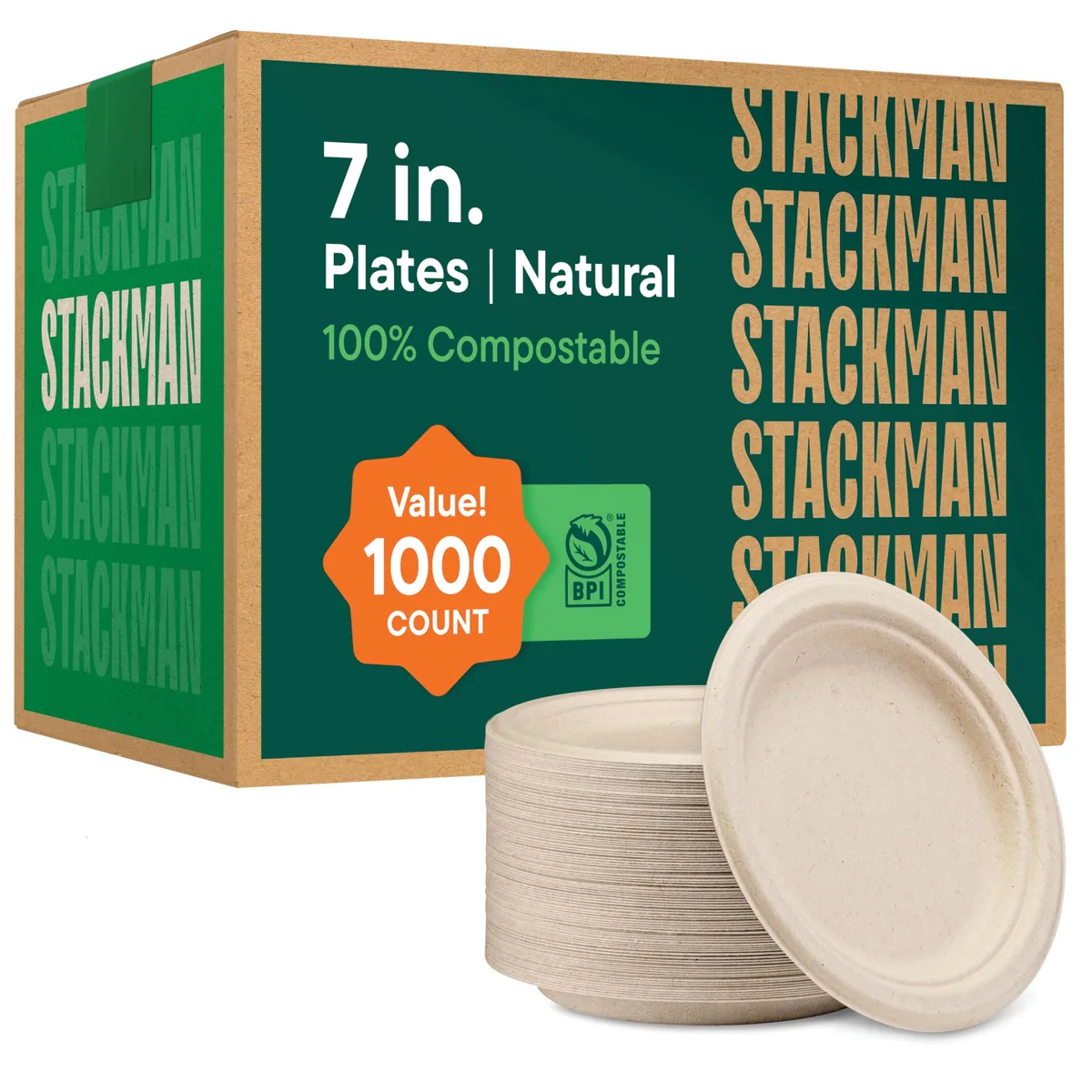
Where a thousand of something actually goes
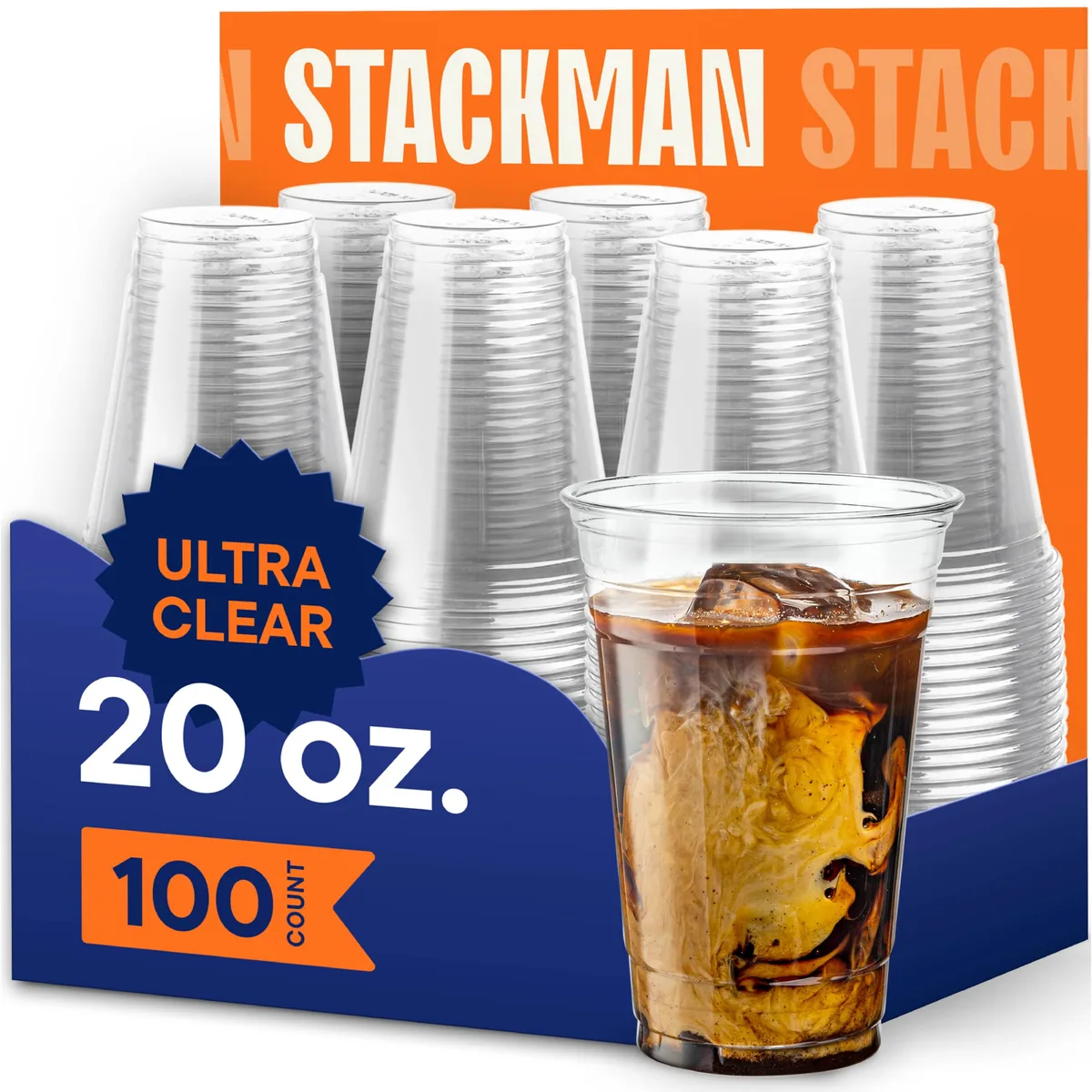
A thousand of anything takes up space. We know this because we pack in those counts on purpose, for kitchens that run through sleeves at a time. But if you are buying for a home or a single event, that same number can become a problem before you even open the box.
Think about where it will live. Our largest single pack holds 2,500 pieces. Stacked flat, a case of 12-inch bagasse plates or 32-ounce PET containers occupies roughly four to six cubic feet. That fits under a commercial prep table. It does not fit in the average apartment pantry. Measure your shelf or cupboard before you commit to a bulk case.
Dry storage is all most of our products need. Sugarcane bagasse plates and bowls keep indefinitely in a cool, dry place. The material is already dried and moulded, so there is nothing in it to spoil. PET cups and lids are the same: keep them sealed until you need them, and they will be fine years from now. Aluminium containers have no shelf life limit either. Moisture is the only thing that works against you here. A damp basement or a cabinet near the sink will soften bagasse over time and can leave water spots on aluminium.
Our training pads and incontinence protection are a little different. They contain absorbent polymers that pull moisture from the air if you leave them exposed. Keep them sealed in their original packaging, in a place where the temperature stays steady, and they will perform as intended when you open them. Once a pad has absorbed humidity from a garage or an unconditioned storeroom, it has already started doing its job, and it will not have the same capacity left for the spill you actually bought it for.
Buy the count you will use within a year or two. For a household, that usually means one of our smaller packs and that is why we make them. For a café or caterer, the case makes sense because the stock turns over fast enough. Either way, know where you are going to put it before it arrives.
When the biggest pack is the wrong answer
Our largest single pack holds 2,500 pieces. That number looks like a bargain on the page, and for a kitchen that burns through containers by the sleeve it usually is. But we have learned that the biggest box is not always the right answer. It depends on who you are and what you actually run out of.
If you run a deli counter, a food truck, or a café, you already know your weekly count. You order by the case because a case is what you use. A 2,500-count pack of portion cups or lids makes sense when you are opening fifty of them a day. The price per piece drops, and you do not have to reorder next week.
For a household, the math works differently. We pack our compostable plates in counts that match what a family goes through at a backyard barbecue or a holiday dinner. A 125-count pack covers a gathering of twenty with seconds and thirds. If you host two parties a year, that same pack sits in your pantry for six months. Sugarcane bagasse does not go bad, but it does take up space. Buying a 500-count case to serve twelve people once means you will still have plates when the next presidential election rolls around.
Training pads tell the same story. A 36-by-36-inch pad covers more floor than most people need for one puppy. If you are housebreaking a single dog in an apartment, a smaller size or a lower count lets you finish the pack while you still need it. The giant bulk cart belongs in a kennel, a vet clinic, or a home with multiple large dogs.
We keep our median per-piece cost at 26 cents across the whole range. You save money when you buy more, but you spend it again on cabinet space if the pack outlasts its purpose. Pick the count that matches how you cook, how often you host, or how many paws live in your home.
A method you can apply to any department
Start with the count you use in a week. That is the number you actually run out of, not the number you think you ought to need. If your household goes through four or five deli containers on a busy night, write that down. If a single training pad covers one accident and you are house-training a puppy, note how many accidents happen per day. These small numbers are more useful than any rule of thumb.
Now multiply by how many weeks you want the pack to last. A case of 250 cups might sound like too many, but if you pour three drinks a day at home, you will finish them in under three months. Our largest packs hold 2,500 pieces, and we made them for kitchens that empty a sleeve every few days. For most households, a smaller count works better. You do not save money on items that sit in a cupboard until they yellow or crack.
Check what the product is made from before you stock up deep. Sugarcane bagasse plates absorb moisture over time, so they are best used within a few months of opening the pack. PET cups keep their clarity longer, but they still age. Aluminium trays have no shelf life to speak of, so a bulk case of those makes sense for anyone who entertains regularly.
Look at the price per piece when you compare sizes. It drops as the pack gets bigger, but only up to a point. At 26 cents on average across our range, the difference between a box and a case is often just pennies per item. Those pennies add up if you order frequently. They do not matter if half the case is still there a year later.
One final check. Ask whether you have room to store what you are buying. Flat items like our 12 inch plates and 36 inch pads take up space even though they are thin. Stack them where you can reach them without moving everything else in the cabinet. Buy enough to last through your next big occasion, plus a normal week or two after that. When you open the last sleeve, it is time to order again.
Where this came from
Everything quoted above is linked below, with the date we read it.
- Composting, U.S. Environmental Protection Agency. Read 22 August 2026.
- PFAS Explained, U.S. Environmental Protection Agency. Read 22 August 2026.
- Bladder Control Problems (Urinary Incontinence), National Institute of Diabetes and Digestive and Kidney Diseases, National Institutes of Health. Read 22 August 2026.
- Compostability Certification, Biodegradable Products Institute. Read 22 August 2026.