Stack Man journal
What compostable actually means, and what happens to the plate afterwards
Compostable, biodegradable and recyclable are three different promises. What the standard tests, why PFAS matters, and whether your own collection will take the plate.
Three words that are not interchangeable
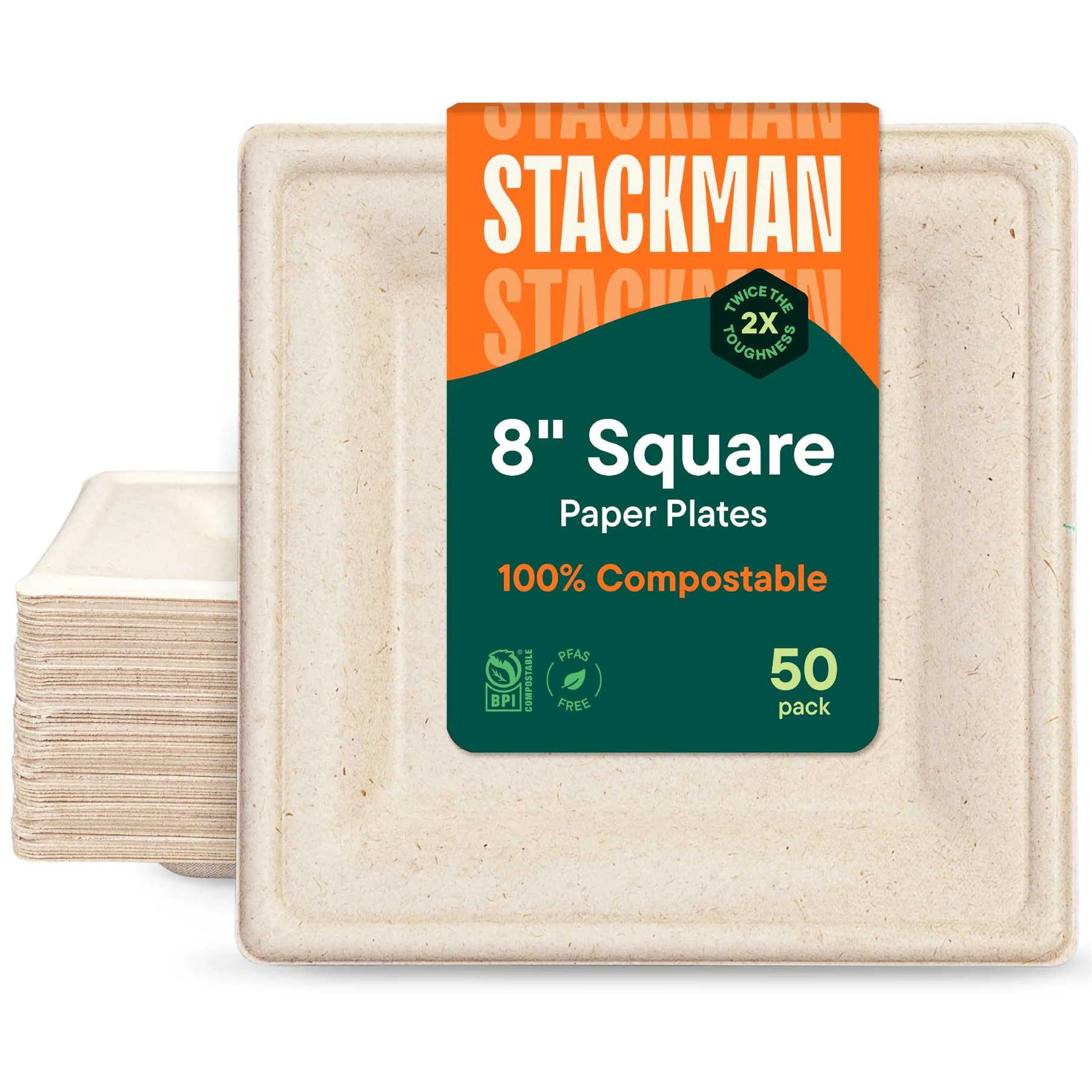
We use the word compostable a lot on this site, and we mean it every time. 57 of our products carry that claim because they are made from sugarcane bagasse, which is the fibre left over after cane is pressed for juice. We mould it wet and dry it into plates, bowls, and trays. But compostable is not the same thing as biodegradable, and neither of those means recyclable. The three terms get swapped around in conversation, but they promise different things.
Compostable means a material breaks down completely into organic matter under specific conditions: heat, moisture, and microbes working together. It leaves behind water, carbon dioxide, and compost you could put on a garden. Our bagasse products are tested to do this within a commercial composting facility, which is where they need to end up. A backyard pile usually does not get hot enough or stay hot long enough to finish the job in the same timeframe.
Biodegradable is broader and looser. It tells you something will eventually break down through natural processes, but it does not say how long that takes or what is left when it happens. A paper towel is biodegradable. So is a leather belt, if you wait decades. The word does not guarantee the material disappears cleanly or quickly. It certainly does not promise you can put it in your green bin.
Recyclable is its own category entirely. It means a material can be collected, processed, and turned into something new. Aluminium cans are recyclable. Our clear PET cups are recyclable in systems that accept them. Compostable items generally are not, because they contaminate the plastic recycling stream. If you toss a bagasse plate into the recycling bin with bottles and jars, it can cause problems at the sorting facility.
So the short version: compostable returns to soil in the right conditions, biodegradable just means it will break down someday, and recyclable means it can become raw material again. They overlap in people's minds, but they do not overlap in practice.
What a compostability standard actually tests
When we say something is compostable, we mean it has been tested against a published standard. In North America the one most of our bagasse products are certified to is ASTM D6400. It is run by ASTM International, an organisation that writes test methods for materials of all kinds. The D6400 standard itself is not a logo you can buy. It is a list of specific lab procedures that a material must pass before it can be called compostable in those terms.
The tests measure three things. First, whether the material breaks down into carbon dioxide, water and biomass at roughly the same rate as paper or leaves do when they decompose. Second, that nothing toxic is left behind in the soil afterward. Third, that the finished compost can actually support plant growth. A product passes only if it clears all three.
What the standard does not tell you is how long that process takes in your own backyard pile. ASTM D6400 was written for industrial composting facilities, where they hold steady at high heat and controlled moisture for weeks. A plate that breaks down inside a commercial composter might take a year or longer in a home bin that runs cooler and drier. We state "100% compostable" on 57 of our lines because they have passed this testing. We do not claim they will vanish in your garden next month.
The certification mark you see on our packaging comes from BPI, the Biodegradable Products Institute. They review lab results against the ASTM rules and issue their seal when a product qualifies. 27 of our products carry that mark. It means an outside body has checked the data.
It does not mean the plate will dissolve on its own if you leave it in a cupboard, and it says nothing about whether it can go into a recycling bin alongside bottles and cans. Compostable and recyclable are different paths. Once a bagasse item enters a recycling stream, it becomes a contaminant there. We make that clear because mixing the two up creates real problems for the people who sort waste by hand.
BPI uses ASTM D6400 as the base standard for assessment for all items going through the BPI Certification process.
Biodegradable Products Institute, Compostability Certification, read 22 August 2026
Why fluorinated chemicals belong in this conversation
PFAS stands for per- and polyfluoroalkyl substances. You can call them "forever chemicals" if you want, because that is what they do: they stick around. We developed these compounds to repel water and oil and that is why they show up in non-stick pans, outdoor jackets, and food packaging that needs to hold grease without leaking through.
The problem is not what PFAS do on the shelf. It is what happens after you throw the plate away. These chemicals do not break down in a compost pile. They sit in the finished compost, and then they end up in the soil where someone grows food. That defeats the purpose of using a compostable plate in the first place. You chose it so it would return to the earth cleanly. If the material carries PFAS into the ground, you have traded one kind of waste for another, quieter kind.
This is why we treat a compostable claim on its own as incomplete information. A product can meet the technical definition of compostability and still contain these chemicals. The standard tests for compostability measure how fast a material breaks down and what is left behind in terms of carbon and biomass. They do not routinely check for fluorine unless somebody specifically asks.
We state that 26 of our products are PFAS-free. We say it because we checked. When we make a plate or bowl from sugarcane bagasse, the material itself does not need chemical treatment to resist grease or liquid. The fibre structure handles that on its own. So there is no reason to add PFAS in the first place, and we do not.
If you are comparing compostable options, look for the PFAS statement alongside the compostable one. A product that is willing to say it contains no forever chemicals has done the extra work. One that stays silent on the subject might be fine, or it might be hoping you will not ask. We think you should ask.
PFAS are widely used, long lasting chemicals, components of which break down very slowly over time.
U.S. Environmental Protection Agency, PFAS Explained, read 22 August 2026
Products may no longer be claimed as BPI-certified unless they meet all conditions of the rule, including no intentionally-added fluorinated chemicals, a test report showing less than 100 ppm total organic fluorine, and a technical review of the formulation.
Biodegradable Products Institute, Compostability Certification, read 22 August 2026

What sugarcane bagasse is and how it behaves
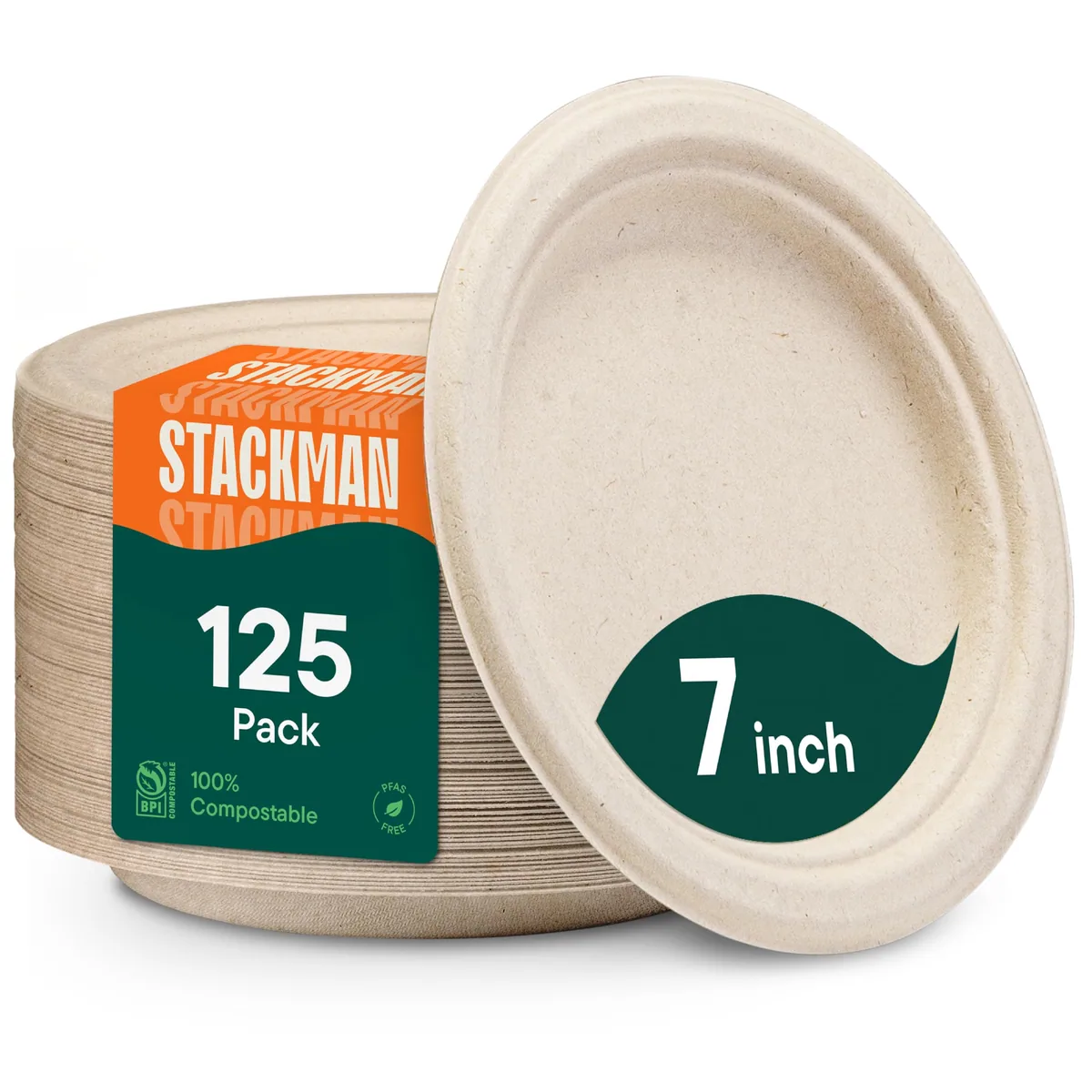
Sugarcane bagasse is what remains after the cane stalks are pressed for their juice. It is the fibrous material left behind. We take that fibre, mix it with water to form a wet pulp, and then press it into moulds shaped like plates, bowls, and trays. The water is pressed out as the pulp takes the shape of the mould, and the result is dried into a rigid form that holds its structure without any plastic lining or wax coating.
A plate made this way handles heat and moisture differently than coated paper does. Paper plates rely on a thin layer of polyethylene or a similar coating to keep liquids from soaking through. That coating stops the plate from turning to mush when you put something wet on it, but it also means the plate will not fully break down in a compost setting because the plastic layer stays intact.
Bagasse does not need that barrier. The pressed fibre is dense enough on its own to resist soak-through for the length of a meal. We have tested it with hot foods, with oily dressings, and with sauces left sitting on the surface. The plate does not soften or collapse under those conditions in the way an uncoated paper plate would. It stays firm enough to hold a loaded portion from the counter to the table without buckling.
If you put one of our bagasse plates in a microwave for a short warm-up, it will not melt or release chemicals the way some plastics can. It will get hot to the touch, which is worth remembering when you take it out. 7 of our lines carry a microwave-safe claim because we have confirmed they hold up through that use. For freezing, 20 of our products are rated freezer safe, so you can store leftovers on them and pull them out later without the material cracking or flaking.
The material has limits. It is stiffer than paper but less rigid than ceramic, so it will flex if you hold it by the edge with a heavy meal on it. We recommend using two hands or keeping it flat on a surface when it is fully loaded.
Commercial composting is not a garden heap
A plate we call compostable will break down. That part is straightforward enough. But where it breaks down matters more than you might think, and the difference between a commercial facility and a backyard heap is what decides whether our bagasse plates do what we say they will.
We make 57 lines from sugarcane bagasse, and every one of them carries a 100% compostable claim. On 27 of those we also state BPI certification, from the Biodegradable Products Institute. That certification is tested against commercial composting standards: ASTM D6400 in most cases. The test runs at sustained high temperatures, with controlled moisture and regular turning to keep oxygen in the pile. Under those conditions the material breaks down completely and leaves behind water, carbon dioxide, and compost that you could put back on soil.
Your garden compost heap does not work that way. It runs cooler. It sits wetter or drier depending on the weather where you live, and it probably does not get turned often enough to keep the process moving steadily. A bagasse plate tossed onto an ordinary home pile might sit there for months, looking largely unchanged, because the conditions it needs to decompose simply are not present. This is not a defect in the material. It is just how decomposition works when you take away the heat and the managed airflow that a commercial facility provides.
So if you are counting on our plates to disappear in your own bin, they probably will not oblige you on any useful timetable. They will eventually break down if the conditions line up right, but we cannot promise you when. For the plates to compost as advertised, they need to reach a facility that can give them the environment they were designed for. That is why we say compostable, not "composts in your backyard." The words mean different things, and we would rather you know the difference before you buy than find out afterward when the plate is still sitting intact in the heap.
Composting is the managed, aerobic (oxygen-required) biological decomposition of organic materials by microorganisms.
U.S. Environmental Protection Agency, Composting, read 22 August 2026
The awkward part: will your collection take it?
Here is the part that trips people up. You buy a plate we have marked as compostable, you finish your meal, and you scrape it into the bin you already put your potato peels in. That makes sense. It is also often wrong.
Most kerbside collection programmes do not accept compostable tableware. They take food scraps and yard waste because those break down quickly in the sort of large-scale composting facilities that serve a whole city. A sugarcane bagasse plate needs more time and higher heat than a banana peel does. If your local programme is not set up for it, that plate will get pulled out at the sorting facility and sent to landfill anyway, and it will not compost there.
So how do you find out? The honest answer is that you have to check. Look up the rules for where you live. Search for the name of your city or county plus "compost acceptance guidelines" or call the number on your waste bill. What you are looking for is whether they list "compostable serviceware" or "certified compostable fiber products" as accepted materials. If they do not list it, they do not want it. Putting it in the bin anyway just creates work for the people who have to pull it back out.
If your kerbside programme says no, you still have options. A commercial composter in your area might take drop-offs. Some do, and some charge a small fee per bag. You can also compost it yourself if you keep a backyard pile or bin, though you should know that it will sit there longer than an apple core will. And if none of that works for you right now, the landfill is where it goes. We would rather you knew that upfront than found out after you bought a case of plates that your town cannot handle.
In the U.S., food is the single most common material sent to landfills, comprising 24.1 percent of municipal solid waste.
U.S. Environmental Protection Agency, Composting, read 22 August 2026
Contamination, from the composter's side
A composting facility runs on trust. When you scrape food onto a plate and drop it in the green bin, you are trusting that the plate will break down along with the scraps. The facility is trusting the same thing. They accept our bagasse plates because they know those plates are made from a material they can handle. Sugarcane fibre breaks down in their conditions. It becomes soil.
One PET cup changes the math entirely. A single piece of conventional plastic in a load of otherwise clean organics can force the whole batch to be diverted or landfilled. The reason is simple but expensive to fix. Compostable material gets ground up, wetted down, and pushed through screens as it breaks apart. Plastic does not. It stays intact, wraps around equipment, and jams the machinery that sorts finished compost from whatever did not decompose.
When an operator pulls a recognisable fork or a clear cup fragment out of a finished pile, that batch fails its quality check. Buyers for landscapers and farms will not take compost that contains visible plastic. So the facility has to re-run it, screen it again, or write off the entire load. That costs them time, labour, and the revenue they expected from selling what they produced. A contaminated bin is not just an inconvenience. It is a direct hit to their bottom line.
This is why certification programs like BPI set strict rules about which materials qualify. They are not being fussy for the sake of paperwork. They are protecting the facilities that have to process what we put in the bin. If we stamped "compostable" on something that would survive the process intact, we would be asking those facilities to absorb the cost of our mistake. We do not do that. We only call a product compostable when it has been tested against a standard the facilities actually use, so that when it arrives at their door, it behaves exactly the way they expect it to.
The feedstocks accepted vary by composting facility and should always be free of contaminants such as herbicides, non-compostable packaging, and produce stickers.
U.S. Environmental Protection Agency, Composting, read 22 August 2026
Only items that are associated with desirable feedstocks like food scraps and yard trimmings are eligible for BPI Certification.
Biodegradable Products Institute, Compostability Certification, read 22 August 2026
What we make in bagasse and what we claim for it
57 of our products are made from sugarcane bagasse. That is what remains after the cane has been pressed for juice. We mould it wet and dry it into the shape you use, which means every plate or bowl starts as a plant fiber rather than something drilled out of a rock or refined from crude oil.
We make those 57 items in diameters that run from 6 inches up to 12.5 inches. You will find them in the Compostable Plates department and in Bowls & Lunch Trays. They are not the only material we work with. We also sell PET plastic cups and containers, aluminium trays, and absorbent pads for pets and incontinence care. But when we say a product is compostable, we are talking about the bagasse line.
Here is what we state about it, taken directly from our own copy across the catalogue. We mark all 57 of these products as 100 percent compostable. Twenty-seven carry BPI Certification. Twenty-six are labeled PFAS-free. We also call them heavy duty, because we test them with real food on them, and we note that some are safe for the freezer or microwave where the brief for that item says so.
We do not print a certificate number. We do not give you an ASTM standard reference or a registration date, because we do not hold one to show. We do not tell you how many tonnes of material we have diverted from landfills, how many trees were not cut down, or what percentage of our packaging is recycled. Those numbers sound precise, but we cannot verify them from where we sit, so we leave them out.
What we can tell you is that we pack these in counts a household actually uses and a kitchen burns through by the sleeve. If you want to know whether a specific plate breaks down in your municipal compost program, you should check with the people who run it, because rules vary by city and we cannot speak for them.
| Material | Lines | What we state |
|---|---|---|
| Sugarcane bagasse | 57 | Compostable on 57, BPI certification on 27, PFAS-free on 26 |
| PET plastic | 50 | BPA-free on 30. Not compostable, and we do not say it is |
| Aluminium | 6 | Recyclable where metals are collected, once scraped clean |
Bagasse or clear PET, when either would work
57 of our lines are made from sugarcane bagasse. Another fifty-one use clear PET plastic. When you are setting up for a party, a food stall, or a week of office lunches, you will often find that both materials come in the size and shape you need. So how do you pick?
Bagasse is what remains after sugarcane is pressed for juice. We mold it wet, then dry it into rigid plates, bowls, and trays. It feels like heavy paper pulp, and it is off-white or pale tan depending on the batch. The material is sturdy enough for hot food, and we have tested it to hold up under loaded burgers, saucy mains, and anything else that sits on a plate through a meal. All 57 of these products are compostable in a commercial facility, and twenty-seven carry BPI certification. They are also microwave-safe if you need to reheat something on the spot.
Clear PET is drawn into cups, lids, and containers that let you see what is inside. This matters more than it sounds. A guest can tell at a glance whether they are reaching for water or iced tea. A customer at a deli counter sees the salad before they point to it. PET does not absorb odors or stain the way some porous materials can, so it stays presentable through a long event. Our PET items are BPA-free and built to resist leaks and that is why forty-one of them earn that claim across the catalogue.
The honest difference comes down to temperature and visibility. If your food is hot, or if you want everything to break down with the scraps afterward, bagasse handles the job. If you are serving cold drinks, displaying prepared foods, or you simply prefer that clean, transparent look, PET is the better call. Most kitchens end up stocking both, and we pack them in counts that match how fast you actually use them up.
The short version
Composting solves one problem cleanly: what happens to the plate after you finish with it. A bagasse plate that goes into a commercial composting facility breaks down completely and comes out as soil that can grow more sugarcane. That is a closed loop. No plastic sits in a landfill for decades. No petroleum went into making it in the first place.
But we should say plainly what composting does not fix. It does not erase the energy used to press and dry the material, or to ship it to you. It does nothing about single-use habits if you reach for a fresh plate every time you eat a sandwich at home. And it only works if the plate actually reaches a facility that can process it. A bagasse plate buried in a backyard pile or tossed in regular trash will sit there about as long as anything else. The technology is real. The logistics around it are still catching up.
So here is the single most useful thing you can do this week, and it costs nothing. Check whether your municipal waste service accepts compostable foodware in their organics stream. Some do. Many still do not, or they accept yard waste but not plates and bowls. Five minutes on your city's website will tell you. If they take it, set up a bin under your sink for the things that used to go in the trash. If they do not, you now know, and you can make choices with that information instead of hoping.
We make these plates because they are better than the alternative when they are handled correctly. We do not pretend they fix everything. You deserve to know where they work and where they do not.
Composting is nature’s way of recycling and is one of the most powerful actions we can take to reduce trash in landfills and build healthy soil.
U.S. Environmental Protection Agency, Composting, read 22 August 2026
Where this came from
Everything quoted above is linked below, with the date we read it.
- Composting, U.S. Environmental Protection Agency. Read 22 August 2026.
- PFAS Explained, U.S. Environmental Protection Agency. Read 22 August 2026.
- Bladder Control Problems (Urinary Incontinence), National Institute of Diabetes and Digestive and Kidney Diseases, National Institutes of Health. Read 22 August 2026.
- Compostability Certification, Biodegradable Products Institute. Read 22 August 2026.