About Stack Man
We make containers, plates, pads, and cups for kitchens and businesses that go through them by the sleeve. Our range covers 143 products across 8 departments. Most of what we sell comes from two materials: sugarcane bagasse, which we mould into compostable plates and bowls, and clear PET plastic for cups and lids that show a cold drink the way it ought to look.
We test our goods the way they are actually used. A plate loaded with something heavy and wet. A cup dropped from counter height. A lid opened and closed until it stops sealing. We only put our name on a product after it has spent a week in a real kitchen and held up.
You will find us at everyday prices, from twelve cents a piece up to cases in the hundreds. We pack in counts that match how people actually run out of things: a household box or a full case for a kitchen that burns through them.
- 143products we make
- 57lines in sugarcane fibre
- 32,880individual pieces across the range
- 8departments
How we make it
We started with one problem. A case of containers arrived crushed, and the lids did not seal. Everything since has come from the same habit: we buy the thing, use it in a real kitchen for a week, and only then decide whether it is good enough to carry our name.
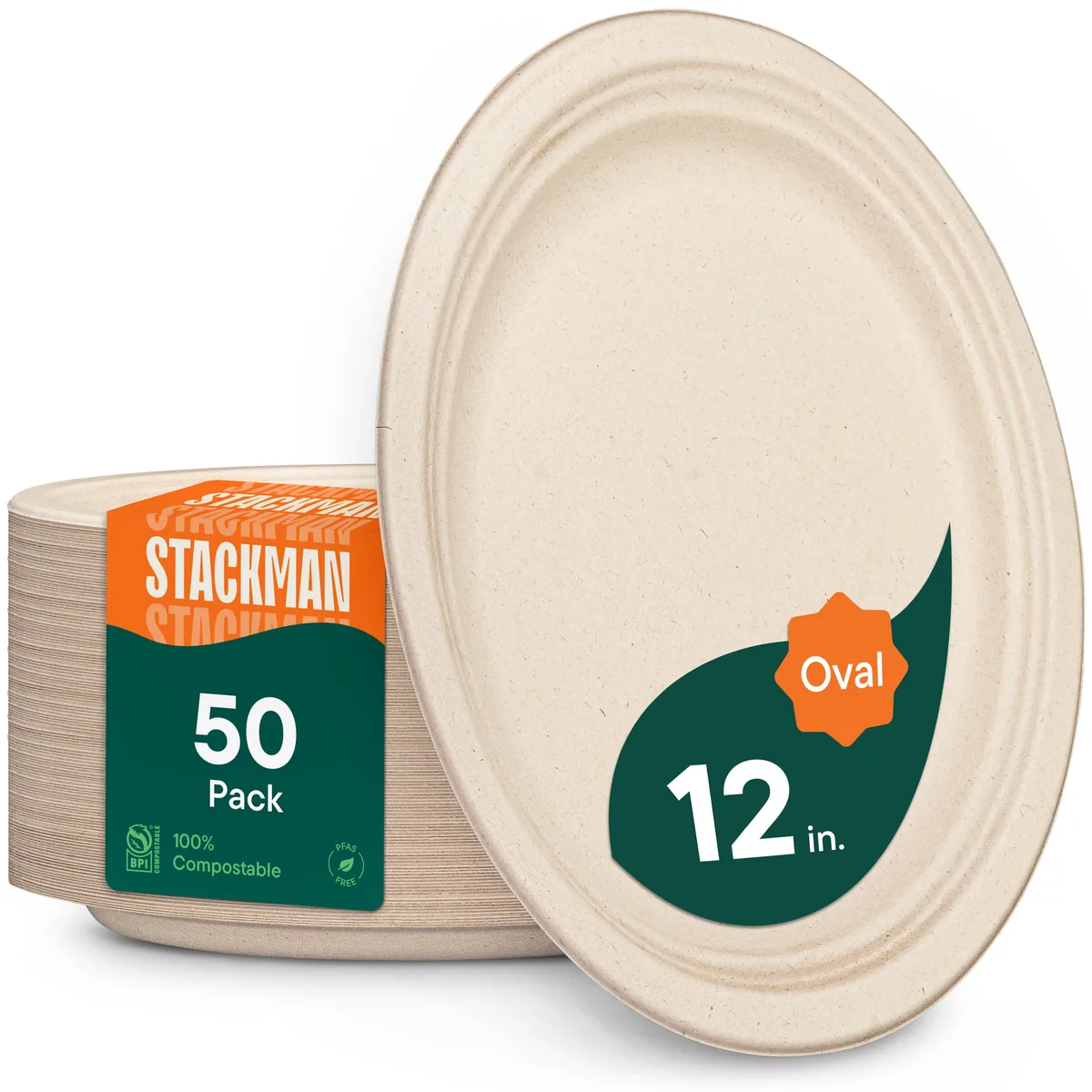
Two materials do most of the work for us. Sugarcane bagasse is the fibre left over after cane is pressed for sugar. It is what you might call agricultural residue if you were writing about it in a report. We think of it as raw material. We take that wet pulp, mould it into the shape we need, and dry it into something rigid enough to hold a loaded plate of food. The result is a bowl or tray that feels different from paper or foam. It has some weight to it, and it does not go soggy when you put something wet on it.
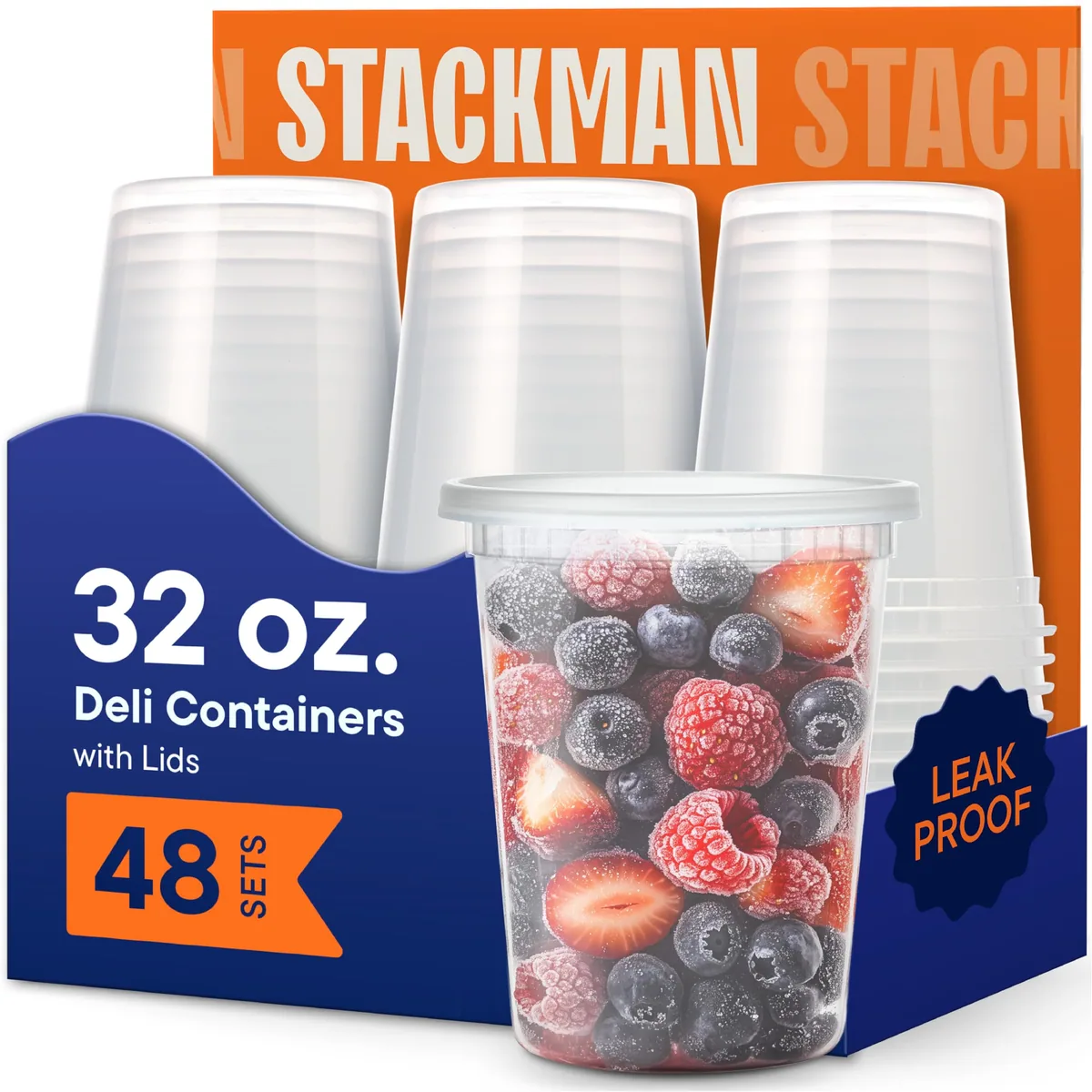
PET is the other material we rely on most. We draw it clear so a cold drink still looks like a cold drink when you hold the cup up to the light. You can see what is inside the container without opening it. That matters more than you would expect when you are working through a busy shift and need to grab the right thing at a glance.
We test the way people actually use these things. Not on a lab bench with instruments, but in the ways that break them: a plate loaded with something heavy and wet, a cup dropped from counter height, a lid opened and closed repeatedly until it finally stops sealing properly. If it does not hold up under that kind of treatment, we do not pack it.
We count our products in the sizes that people actually run out of. A box for a household kitchen, and a case for a place that goes through them by the sleeve. That is how we arrived at 143 products across 8 departments, and it is why we keep making them this way.
How we got here
We did not set out to build a catalogue. We started because a case of containers arrived crushed, and the lids would not seal. That was the whole problem at the beginning: we bought something, it failed in a real kitchen, and nobody seemed to have fixed it.
So we found one that worked. Then another. Every line we have added since came from the same habit: run into something you need, use it for a week, decide whether it is good enough to carry our name. We kept running into gaps. A plate that bends when you load it with something wet. A cup that cracks if you drop it from counter height. A lid you open and close until the seal gives out.
That is how one product became 8 departments. We make plates and bowls from sugarcane bagasse, which is what is left after the cane is pressed for sugar. We mould it wet and dry it into shapes that hold up. For cold drinks we draw PET clear so you can see what you are holding. We pack in the counts people actually run through, whether that is a household box or a sleeve for a kitchen that goes through them fast.
143 products now, across compostable tableware, drinkware, deli containers, take-out packs, bowls, pads for pets and people, and a few pieces of kitchenware. They all started the same way: we needed it, we could not find one we trusted, so we made it ourselves.
The people who work on it
The people behind this range share one habit. They buy the thing, use it in a real kitchen for a week, and only then decide whether it is good enough to carry our name. We test the way you actually use our goods. A plate loaded with something heavy and wet. A cup dropped from counter height. A lid opened and closed until it stops sealing.
We work in two materials most of the time. Sugarcane bagasse, which is what remains after the cane is pressed for sugar, moulded wet and dried into plates and bowls. And PET, drawn clear so a cold drink looks like a cold drink. The counts we pack are the ones people actually run through. A household box and a case for a kitchen that goes through them by the sleeve.
We do not publish names, photographs or a headcount. There is no founding date on this page either, because we are not going to invent one.